Real Estate Marketing Trends for 2026: What Smart Developers Need to Know to Stay Ahead
Every year the real estate market evolves, and 2026 is shaping up to be a particularly interesting one. After several years of rapid digital changes,
Every year the real estate market evolves, and 2026 is shaping up to be a particularly interesting one. After several years of rapid digital changes, shifting buyer and tenant behaviors, and economic adjustments, developers who adapt their marketing approach early will have a clear advantage over those who stick to traditional methods.
At SHARP, we spend a lot of time observing what actually works for residential, office, hospitality, and mixed-use projects. Here is our honest take on the key real estate marketing trends that will matter most in 2026 — and how forward-thinking developers can use them to their advantage.
The days when beautiful renders and catchy slogans were enough are fading fast. In 2026, the most successful projects will be those that position themselves as complete ecosystems rather than collections of square meters.
Buyers and tenants no longer just want a home or an office — they want to understand how the project fits into their lifestyle, daily routine, and long-term goals. Developers who invest in deep local intelligence and craft a genuine ecosystem story will see stronger emotional connection, faster decision-making, and more stable pricing. Generic marketing will increasingly feel outdated and ineffective.
Broad, untargeted advertising campaigns that focus only on lead volume are becoming less effective and more expensive. Smart developers are shifting toward precision demand generation that attracts fewer but much higher-quality prospects.
This means using targeted SEO, geo-specific campaigns, and performance marketing optimized for intent rather than impressions. In 2026, the winners will be those who bring in leads that already understand the project’s unique value and are genuinely ready to engage. The result is shorter sales cycles and better conversion rates across residential, office, and hospitality assets.
One of the biggest shifts we are seeing is the move from transactional marketing to relationship-driven strategies. Professional CRM systems (especially HubSpot) are no longer optional — they are becoming essential for top-performing projects.
Developers who nurture leads with personalized, timely communication and track the entire customer journey will build trust faster and turn initial inquiries into loyal advocates. This compounding effect is particularly powerful in longer-cycle assets like offices and mixed-use developments, where decisions can take months.
Digital efforts alone will not be enough in 2026. The projects that stand out will combine online precision with meaningful real-world experiences. Preview events, community activations, wellness sessions, and thoughtfully planned pop-ups help potential buyers and tenants truly feel the atmosphere of the project before committing.
This hybrid approach — strong digital presence supported by memorable offline moments — creates emotional connections that accelerate absorption and leasing velocity.
With voice assistants and AI-powered search becoming everyday tools, conversational and question-based content is gaining importance. Developers who optimize their websites and content for natural language queries (such as “best family-friendly apartments near [area]” or “how to find flexible office space in [city]”) will gain better visibility.
At the same time, clear, structured data and fast-loading mobile experiences will be critical for appearing in AI overviews and voice results.
As mixed-use developments continue to grow in popularity, marketing strategies that treat residential, office, retail, and hospitality components separately will lose ground. The trend is toward fully integrated campaigns that create synergy and cross-traffic between different parts of the project.
When the branding, demand generation, and activation work together under one cohesive ecosystem story, the entire development performs better — from faster residential sales to stronger retail vitality.
The common thread running through all these 2026 trends is integration and intelligence. Developers who move away from fragmented, traditional marketing toward a structured, ecosystem-focused approach will have a significant edge.
This is exactly why we developed the LEAPR Method — to help projects combine local intelligence, strong positioning, activation, performance marketing, and relationship compounding into one coherent system that delivers measurable results.
If your project is preparing for launch, undergoing repositioning, or simply needs to perform better in the coming year, taking time now to align with these trends can make a real difference.
At SHARP we help real estate developers and asset managers implement these trends in a practical, results-oriented way. Whether you are working on residential, office, hospitality, mixed-use, or urban services projects, we can review your current strategy and show you exactly where small but powerful changes can create big improvements.
Feel free to reach out and book a discovery call. We will share honest insights tailored to your specific project and discuss how you can stay ahead in 2026 and beyond.
The six key real estate marketing trends in 2026 are: (1) Ecosystem Branding — positioning projects as complete lifestyle destinations rather than just square meters; (2) Precision Demand Generation — targeting high-intent leads over broad ad volume; .(3) CRM-Driven Relationship Compounding — using tools like HubSpot to nurture leads across long sales cycles; (4) Experiential Activation — combining digital campaigns with real-world preview events; (5) AI & Voice Search Optimization — creating conversational content that surfaces in AI overviews; (6) Integrated Mixed-Use Marketing — running unified campaigns across residential, retail, office, and hospitality components.
Ecosystem branding in real estate means positioning a development as a complete lifestyle environment — not just a building or a set of units. Instead of marketing square meters, developers communicate how the project fits into buyers’ daily routines, values, and long-term goals. This approach uses deep local intelligence to craft a narrative covering amenities, neighborhood character, community, and long-term vision. Projects that use ecosystem branding see stronger emotional connection, faster buyer decisions, and more stable pricing.
Smart developers in 2026 are replacing broad, volume-focused advertising with precision demand generation. This means using targeted SEO, geo-specific campaigns, and performance marketing optimized for buyer intent rather than impressions. The goal is to attract fewer but better-qualified prospects who already understand the project’s value and are ready to engage — resulting in shorter sales cycles and higher conversion rates across residential, office, and hospitality assets.
CRM systems — particularly HubSpot — are becoming essential for real estate marketing because buying and leasing decisions often take months. A professional CRM allows developers to send personalized, timely communication to leads at every stage of the customer journey. Over time, this builds trust, turns initial inquiries into loyal advocates, and creates a compounding relationship effect. This is especially critical for longer-cycle assets like offices and mixed-use developments where consistent follow-up determines whether a deal closes.
A developer should review and update their marketing strategy before a new project launch, during repositioning of an existing asset, or whenever conversion rates are declining or sales cycles are growing longer. Aligning with 2026 trends — ecosystem branding, CRM integration, and AI search optimization — early in the process delivers the strongest competitive advantage. The earlier these elements are built into the strategy, the greater their impact on pricing stability and absorption speed.
Broad, volume-focused traditional advertising is becoming less effective and more expensive in 2026. Buyers and tenants are increasingly selective, and generic campaigns fail to create the emotional connection needed to drive decisions. Offline activations and events still carry real power — but they work best as part of a hybrid strategy, layered on top of precision digital marketing, CRM nurturing, and a strong ecosystem brand story, rather than as standalone tactics.
The LEAPR Method is a structured real estate marketing framework developed by SHARP. It integrates five key pillars: Local Intelligence, Ecosystem Positioning, Activation, Performance Marketing, and Relationship Compounding. Rather than treating these as separate activities, LEAPR combines them into one coherent system designed to deliver measurable results across residential, office, hospitality, mixed-use, and urban service projects.
Mixed-use developments perform best when all components — residential, office, retail, and hospitality — are marketed under a single integrated campaign rather than separate silos. A cohesive ecosystem story creates synergy and cross-traffic between the project’s parts. When branding, demand generation, and activation work together, the whole development benefits: residential sales accelerate, retail vitality strengthens, and the overall asset maintains higher perceived value.
To appear in AI-generated results and voice search, real estate developers should create content that answers natural, conversational questions — such as ‘best family-friendly apartments near [area]’ or ‘how to find flexible office space in [city]’. Websites should load fast on mobile, use structured data markup (like FAQPage and LocalBusiness schema), and organize content with clear headings and concise direct answers. AI overviews strongly favor pages that are authoritative, well-structured, and immediately useful.
Experiential marketing in real estate refers to creating real-world events and activations that let prospective buyers and tenants physically feel a project before committing. Examples include preview events, community activations, wellness sessions, and pop-up experiences at or near the development site. When layered on top of a strong digital presence, these experiences create emotional connections that significantly accelerate sales absorption and leasing velocity.
Every year the real estate market evolves, and 2026 is shaping up to be a particularly interesting one. After several years of rapid digital changes,
Many talented architecture and interior design studios create stunning work, yet they still struggle to turn that creative excellence into consistent new commissions. Developers and
The real estate market keeps getting more competitive every year. Buyers today have plenty of options and they are taking longer to make decisions. As
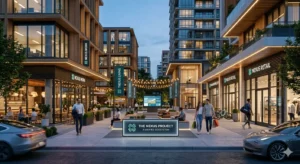
Mixed-use developments are becoming the new standard in real estate. Combining residential, office, retail, hospitality, and sometimes urban services in one project sounds exciting on